THANK YOU FOR SUBSCRIBING


× 
Construction Tech Review Weekly Brief
Be first to read the latest tech news, Industry Leader's Insights, and CIO interviews of medium and large enterprises exclusively from Construction Tech Review


Handling Developments Using Proven Methodologies
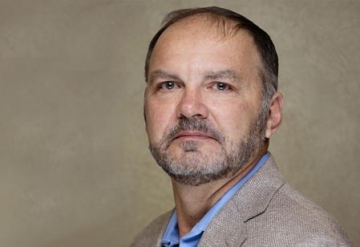
Jason Winters, Regional Project Director, Americas, Fugro
 Jason Winters, Regional Project Director, Americas, Fugro
Can you walk through the journey that you've had as a leader and as an individual in the project management space? What does a typical day as the regional project director for Americas in Fugro look like?
In the mid-'90s, I began my project management career with an international oil and gas distributor. This resulted in many project management jobs around the world, including a 20-year stint in Brazil with a leading global manufacturer of valves and subsea equipment. We had some internal construction projects in Brazil where we doubled the size of our manufacturing capabilities and for five different sites. I was the program manager for the Project Management Institute in Brazil for a local chapter. I also provided project management services for the 2016 Olympics in Rio. After moving back to Houston in 2022, I joined Fugro to initiate and direct a PMO in the Americas region to support survey services that we provide to renewable energy programs such as offshore wind farms and coastal resilience efforts.
A typical day in my role is aligning the different locations that we have under our remit to implement best practices in project management. We train and mentor our staff and provide them with the required tools and resources to manage their projects. I view every task through a project management lens, whether it is business development, commercial development, or country management.
What are some of the major pain points in the project management process?
Depending on the size of your project, it is essential to secure a commitment from the top-level management responsible for greenlighting the project.
Without that buy-in, it is difficult to successfully execute a project. It is also important to clearly define the scope of the project and ensure the involved personnel have realistic expectations of its end result through the use of targeted performance metrics (KPIs).
The last point is ensuring there is a detailed project plan that has all the moving parts of project management. Project managers are business owners, and business owners need to have a deep understanding of the commercial context of the endeavor in mind and stay in the know regarding who the key stakeholders are that could support and or obstruct the project.
What are some of the industry trends that have evolved over the years that can help tackle project management issues?
The best and the most current is a recent trend from the Project Management Institute. Called the talent triangle, it dictates that there are three pillars of excellence in project management. The first is adapting your ways of working to the type of project that you are going to manage.
"Risk management should be a priority for any project, especially in today's environment."
The second is ensuring that the project managers have the necessary business acumen to contextualize and negotiate different elements of the project, and then have the skills to lead and build teams that are well-balanced with empathetic leadership. The third pillar is called power skills which emphasizes leadership among other key communication skills; the lack of a transparent communication channel is a major cause of issues on many projects. If the roles and responsibilities are unclear and there are no frictionless communication channels, then that becomes a large obstacle to the project's success. I faithfully follow the triangle in my day-to-day operations and attest to its impact during project management events that I attend or in which I speak.
Is there a recent project initiative that you have been part of where you employed these trends to make it successful?
I have used it on many projects, but it primarily depends on who is the lead investor or the lead stakeholder in your project. I have had experiences where the key stakeholder had negative expectations from the start or had perceived challenges that were not addressed by previous companies or project managers they worked with. In these situations, I helped them understand how project management is a business ownership function and not just managing the schedule from an operational standpoint.
I have seen cases where operations did not support the project or the project did not support the operation. Bringing all the sides together and aligning all the functional areas is a recurring theme in the projects I work on.
What are some of the rising trends in the project management industry that you see?
Risk management is a key topic growing in popularity since the pandemic. If project managers are not employing a good risk management strategy, it is a huge loss of potential for mitigating and minimizing many hazardous situations. Risk management should be a priority for any project, especially in today's environment.
A vision I see for the future of project management is undoubtedly artificial intelligent-dependent processes and automated workflows. However, companies need to be aware that even with automated processes and AI, humans need to be making decisions.
Do you have any advice for your peers and the upcoming project management professionals as to how they can lead their teams at their respective organizations?
Managing a project is empowering your project managers. Give them the authority to make decisions at certain levels. Project governance is important, but being clear and upfront about the roles and responsibilities each personnel has and ensuring project managers have the necessary resources to get the job done is at the heart of every successful project.

Read Also
The Human Side of Construction Safety Leadership
Brett Smith, Global Safety Director, Gardner Builders

Leading with Safety at Scale: A Practical Approach to Risk Management in Construction
Donovan Seeber, CHST, Corporate Safety Manager, Griffith Company

Engineering Roadway Design with Accountability and Vision
Maria Luchey, Project Manager, Roadway Design, Keck & Wood
How Early VDC Involvement Reduces Risk and Rework on Complex Projects
Nicholas DiRenzo, Virtual Design & Construction Director, Meyer Najem
Coaching, Not Blaming: Building a Stronger Construction Safety Culture
Jesse Garcia, Safety Manager, E-Z Bel Construction, LLC
Building by the Model: Turning BIM into the Backbone of Field Execution
Adam Abernathy, BIM/VDC Manager, Jesse Stutts Inc


 Copyright © 2026 All Rights Reserved | by:
 Construction Tech Review
| Subscribe | About us | Sitemap| Editorial Policy| Feedback PolicyTop
