THANK YOU FOR SUBSCRIBING


× 
Construction Tech Review Weekly Brief
Be first to read the latest tech news, Industry Leader's Insights, and CIO interviews of medium and large enterprises exclusively from Construction Tech Review

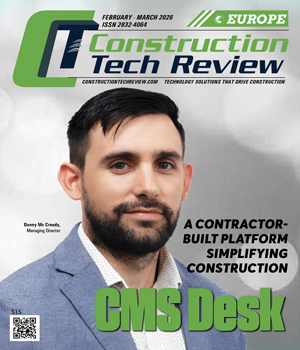
CMS Desk, a specialised platform designed for the construction industry, was not conceived in corporate boardrooms or high-tech labs. Instead, it was developed on construction sites by a team of developers, construction managers, and engineers with firsthand experience of the industry’s challenges and inefficiencies. What began as an internal tool has evolved into a comprehensive platform that streamlines operations reduces costs and enhances project efficiency. The story of CMS Desk began with Piotr Szczypkowski, an experienced electrical and mechanical contractor, and his project manager, Danny Mc Cready. As Szczypkowski’s business expanded, so did the complexity of managing procurement and project execution. In response, he tasked Mc Cready with establishing a procurement department to bring structure and efficiency to these processes. Mc Cready initially relied on interconnected spreadsheets, but their limitations quickly became apparent. The lack of transparency, inefficiency and extensive manual effort impeded operational progress. Exploring commercially available software solutions proved unviable, as many were prohibitively expensive, overly complex or burdened with rigid subscription models that did not align with the company’s requirements. “We needed a practical solution, purpose-built by industry professionals who understood the day-to-day challenges we were facing,” explains Mc Cready. Drawing on his web development knowledge, he took a hands-on approach to designing a system himself that directly addressed the needs of the construction sector. The result was EMS—a simple but effective management system that streamlined processes and eliminated bottlenecks as well as improved operational efficiency. EMS demonstrated how digital tools could address longstanding inefficiencies in construction, providing greater visibility and control over key processes. Recognising its transformative potential, Szczypkowski provided financial backing for Mc Cready to further develop and refine the system. With the support of professional developers, Mc Cready evolved EMS into CMS Desk—a fully integrated platform tailored to the construction industry’s unique demands.
Building Design
Wouldn’t it be easier to build a house if it has already been built? Sounds impossible, but if the contractor has modeled the house in a 3D environment while designing it, they clearly understand every detail, greatly reducing the chance of errors. They would have already mapped out and visualized the rafters, framing, sheathing, and overall design, creating a precise plan they can replicate during construction. This was the vision Digital Canal had while creating its software. SolidBuilder, a powerful software that simplifies house-building projects, and Design Expert, which is fast, easy and designed for great renderings, working drawings, etc. The company was born in 2001 of a purchase from a NASDAQ listed publicly held entity. Today, it provides design software for residential contractors and building professionals, including Design Expert and its flagship platform, SolidBuilder, developed specifically for builders. “What makes SolidBuilder stand out from the competition is our object-oriented approach to designing and framing houses in the software environment first,” says Jim Balk, 28-year Digital Canal employee and former builder. SolidBuilder represents each component as an object with accurate dimensions in this approach. While most designers can create CAD plans, these designs don’t always reflect on-site conditions, disconnecting designers from contractors. Our software’s true component dimensions make the plan easier for everyone involved in the project. The platform tracks each object and automatically adds unused parts to the cut list with precise dimensions and unique identities. If needed, the platform can reuse the mishap cuts in the 3D model to maximize usability and minimize waste and costs. This will save you time and money! This approach enables the creation of an accurate master material list for takeoff, providing users with better cost control. It further allows builders to spot and fix potential issues early by visualizing design flaws BEFORE construction begins. Unlike other platforms that rely on line representations with labels, SolidBuilder provides accurate visualizations of the objects in a plan/design. Users can seamlessly switch from a plan view to an elevation or a cross-section to a fully framed 3D model. Different layers of the model can also be isolated to gain a clearer understanding of each component using the visibility command. This level of detail is handy for field tasks like accurately calculating the correct valley angle for roofing or cutting a jack rafter or bird’s mouth.

Tool Tracking

In the construction industry, managing tools and equipment is often a complex and time-consuming task. Missing tools can lead to unnecessary purchases, project delays, and miscommunication among teams. ShareMyToolbox, founded by Chris Wirtz, offers a simple, intuitive solution that streamlines tool tracking across both field and office teams. By making tool management more visible and accessible, ShareMyToolbox is transforming how construction companies handle their assets, improving efficiency and accountability across the board. At its core, ShareMyToolbox is designed to bring clarity and transparency to tool tracking. “What we focus on is unlocking knowledge and making it accessible,” says Wirtz, co-founder and CEO. “When everyone, from leadership to the field, can see the same information, things change. Conversations become more grounded. Decisions get easier.” This philosophy guides the company’s approach to tool management, ensuring that teams are not guessing about tool availability or location, but instead have access to clear, real-time information. One of the key features of ShareMyToolbox is its mobile-first platform, which is designed to integrate seamlessly into existing workflows. Wirtz emphasizes that the ShareMyToolbox implementation process begins by reflecting how companies already operate. This ensures that field teams, who may not be tech-savvy, can easily adapt to the system without requiring extensive training. The platform is simple to use; if someone can use a smartphone camera, they can quickly learn to scan tools, borrow them, or perform audits with minimal effort.
CXO INSIGHTS

Using Digital Technologies to Unlock Modern Methods of Construction
Andrew Pryke, Managing Director, BAM Construct UK

Harnessing the Power of BIM Technology to Optimize Collaborative, Successful Projects
Tom Perry, Managing Director of Engineering Services, Shawmut Design and Construction

Building Bridges: Crafting a Digital Experience to Unite Field Workers and Office Employees
Joshua Nelson DBA, Director of Technology Experience, Power Design

Bringing Information Security to the Core
Angelika Holl, Head of Business Continuity | Chief Information Security Officer, Zeppelin

Social Value: Investing in the Legacy of our Projects
Suzanne Lutton, Head of Stakeholder & Social Value, Farrans Construction


IN FOCUS
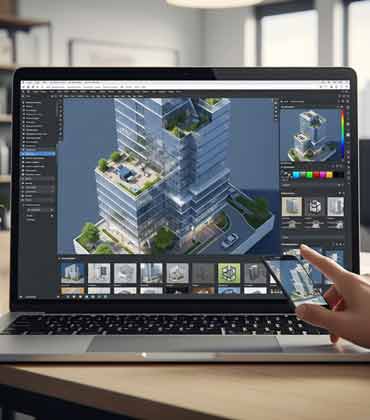
The Digital Future of Architecture: Innovations in Building Design Software
Building design software is currently driven by advancements in digital technology and an increasing demand for efficiency, precision, and sustainability within the Architecture, Engineering, and Construction (AEC) industry.
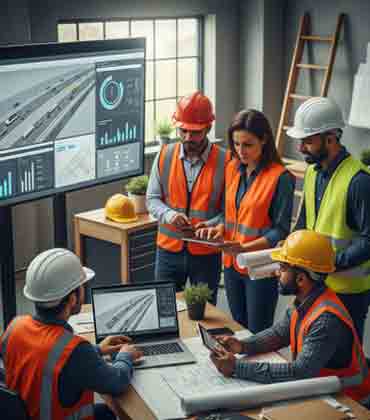
Redefining Highway Construction: A New Era of Efficiency and Innovation in Europe
Europe's extensive and ageing road networks are undergoing a profound transformation, driven by an imperative for efficiency, sustainability,
EDITORIAL
Advancing Infrastructure Through Smarter Construction Platforms
Construction in Europe continues to evolve as technology redefines how projects move from initial planning to final delivery, creating a more connected environment for stakeholders at every level.
Digital systems are no longer treated as side tools. Companies are building them into core operations, where they work alongside people to improve accountability and reliability. With this foundation, the sector is better positioned to deal with urban growth, stricter safety rules and sustainability demands while maintaining stronger control and long-term stability.
Highway construction management platforms represent one of the most important advances within this movement, offering an integrated approach to scheduling, cost control and on-site monitoring. With real-time dashboards and mobile connectivity, managers can anticipate potential delays, adjust resource allocation and ensure that safety measures are upheld throughout every stage of development. Public agencies and private contractors are increasingly turning to these systems to ensure projects meet deadlines, stay within budget and deliver roads that support both economic growth and community mobility.
The impact of these solutions extends far beyond efficiency, creating transparency between all stakeholders and reinforcing compliance with safety and environmental requirements. Decision-makers have today's accurate and up-to-the-minute data to inform improved decisions, enabling infrastructure networks to expand sustainably and respond to the demands of future mobility. With increasing demand for new transport infrastructure, these platforms are becoming more crucial to ensuring Europe's highways are reliable, safe and constructed for future generations.
In this edition of the Construction Tech Review Europe, we explore the recent developments in highway construction management, transforming the way infrastructure projects are planned, executed and maintained across the continent.
We hope this edition of the Construction Tech Review Europe helps you find the right partner for your business requirements.

 Copyright © 2026 All Rights Reserved | by:
 Construction Tech Review
| Subscribe | About us | Sitemap| Newsletter| Editorial Policy| Feedback PolicyTop
