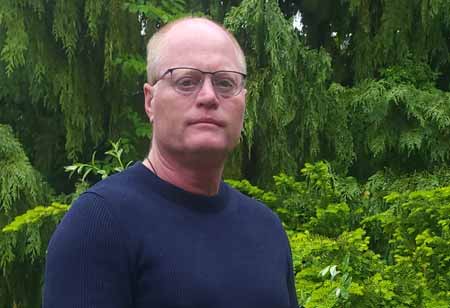







 Jeremy Register, Director of Virtual Design and Construction, Metcon, Inc
A Career Built Across Design and Construction Phases
My approach to leading virtual design and construction initiatives has been shaped by hands-on experience across both design and construction workflows. I developed an early interest in drafting in high school, which evolved into architectural drafting with AutoCAD. In the early 2000s, I transitioned into the MEP design space, providing 2D coordination services for trade contractors while also producing mechanical contract designs.
As Revit emerged as the primary design platform, BIM coordination followed naturally. Many of the same trade contractors I supported in 2D began requesting BIM coordination services, allowing me to experience BIM’s evolution from both design and construction perspectives. That dual exposure clarified how impactful coordination can be when applied strategically and consistently.
Spending years on both sides of the table gave me a deep understanding of the challenges each phase presents. I eventually moved into a full-time VDC role, supporting projects from early design coordination through construction execution. This end-to-end perspective continues to shape my philosophy and, in my view, represents the most effective path to delivering meaningful VDC impact.
I’ve learned that early engagement, clear standards, and defined data ownership are critical. Projects where VDC begins in design and carries through construction consistently outperform those where coordination is introduced later. Collaboration with third-party BIM coordinators, trade partners, and internal teams has reinforced the importance of trust, transparency, and adaptable workflows.
“When high-quality models are delivered to construction teams, the bottleneck at the construction-phase coordination kickoff is reduced, resulting in a more efficient and productive trade coordination process.”
Equally important is simplicity. Overly complex processes reduce adoption and limit effectiveness. Practical, field-driven VDC strategies—focused on coordination quality and constructability rather than technology for its own sake—deliver the greatest value.
Creating Alignment Through Shared VDC Platforms
Effective collaboration between design, construction, and technology teams requires a shared platform for communication and accountability. Using tools such as Autodesk Construction Cloud issue tracking, teams can centralize coordination, improve visibility, and streamline decision-making.
Engaging stakeholders early, setting expectations for model use, and aligning workflows with project sequencing are foundational steps. Clash detection, consistent issue tracking, and regular model-based coordination meetings promote transparency and reinforce accountability across disciplines.
When workflows remain practical and clearly defined, teams resolve issues earlier and maintain alignment from design through construction.
Overcoming Organizational Barriers to VDC Integration
One of the greatest challenges in integrating VDC into traditional construction workflows is a lack of clarity about its purpose and implementation. Without executive buy-in and clearly defined expectations, even well-intentioned BIM efforts struggle to gain traction.
A strong BIM Execution Plan is essential. It establishes roles, responsibilities, and standards for model use. While often emphasized during construction, it must also be embraced during design. Without early alignment, projects frequently encounter confusion and rework later.
I strongly advocate for early design-phase coordination. When model standards and alignment are established at project setup, field layout and construction teams benefit downstream. Early reviews reduce RFIs and design-related conflicts, allowing trade partners to focus on constructability as model Levels of Development increase.
When high-quality models are delivered to construction teams, the bottleneck at the construction-phase coordination kickoff is reduced, resulting in a more efficient and productive trade coordination process. This allows construction teams to focus on solving real-world installation challenges rather than correcting foundational model inconsistencies.
Construction-phase coordination presents its own challenges. Even with strong design models, teams must validate constructability, increase model detail, and ensure systems function together in real world conditions. Full participation from major trades is critical. Gaps arise when trades rely on third-party modeling that does not capture the full scope or fail to provide models altogether. Identifying these risks early is essential.
A final hurdle is translating coordinated BIM data into field-ready installation information. Traditional 2D shop drawings cannot fully capture the value of coordinated 3D models. Providing field teams with intuitive 3D access on tablets is a strong starting point, but usability matters. Models must be structured and filtered for field needs.
Advanced tools—including robotic total stations for model-based layout, augmented reality, and 360-degree site capture with model overlays—further strengthen installation accuracy. When field teams can validate conditions and communicate issues back to coordination teams in real time, problems are resolved earlier, reinforcing the tangible value of VDC-driven workflows.
The Skills That Will Define Future VDC Leadership
The next generation of VDC leaders must bridge technical expertise with practical construction knowledge. Understanding BIM, data workflows, and emerging technologies is essential—but applying those tools to improve field execution is what ultimately drives results.
Communication and change management will also define future leaders. Simplifying complex workflows, building stakeholder trust, and securing buy-in at both project and executive levels are critical skills. Strategic thinking—evaluating technology based on value, scalability, and return on investment—will differentiate true VDC leaders from technical specialists.
Ultimately, the future of VDC belongs to those who can connect design intent, coordinated data, and field execution into a seamless, value-driven process. When technology supports people and projects—not the other way around—the industry moves forward.