THANK YOU FOR SUBSCRIBING


× 
Construction Tech Review Weekly Brief
Be first to read the latest tech news, Industry Leader's Insights, and CIO interviews of medium and large enterprises exclusively from Construction Tech Review

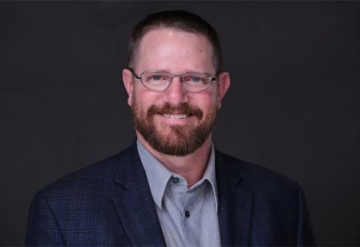



The Human Side of Construction Safety Leadership
Brett Smith, Global Safety Director, Gardner Builders
 Brett Smith, Global Safety Director, Gardner Builders
Gardner strives to be a place where we feel valued, challenged, and love to come to work This requires us to lead with empathy while continuing to elevate the platinum standard as we define it – standard by which all others are compared.
This should weigh heavily on us as leaders, especially within an industry challenged by severe labor shortages, inflated material cost, and pressing production demands. But it’s also something that sets us apart as we lean into and own our vulnerabilities and make it okay to express uncertainty, frustration, and concern where appropriate.
Humanizing the experience we share in this, I personally reflect on the individuals who’ve brought me up over the years and leverage their inner strengths: 1) Hard workers, often hardened men, who’ve had my back; 2) Visionaries who’ve persevered in pursuit of a better state – what could be; and 3) Underdogs in a rough + tough industry who’ve earned their chops – myself + others, too.
Confronting the Mental Health Crisis in Construction
In a predominately male-dominated industry, an inordinately high value is placed on being ‘tough’, so that anything resembling a mental health condition, something human in all of us, has traditionally been stigmatized as a perceived weakness.
As a result, with nearly two-thirds of workers reporting some degree of anxiety or depression, the construction industry is experiencing a mental health crisis with suicide rates among the highest of any industry, due to several contributing factors:
• High stress, deadline-driven work
• Long, hard work hours leading to fatigue
• Limited job control
• Cyclical work contributing to financial strain
• Separation from family when traveling
• Chronic pain
• Substance misuse
Using Data and Training to Strengthen Safety Outcomes
In an industry so heavily dependent on human performance, data is an invaluable asset used to identify strengths and gaps in terms of both knowledge and aptitude. Training and different forms of education are critical in ensuring our workforce is fully equipped to perform their jobs safely.
"In a predominately male-dominated industry, an inordinately high value is placed on being ‘tough’, so that anything resembling a mental health condition, something human in all of us, has traditionally been stigmatized as a perceived weakness."
As leaders, we must involve our employees throughout the process – planning, problem solving, and decision making. Through actions and decisions, we must trust our teams to understand and communicate to us what works and, perhaps more importantly, what doesn’t.
The Evolving Role of Safety Leadership in a Technology-Driven Industry
From wearable technologies and drones to virtual reality and artificial intelligence, safety is being revolutionized, though one thing remains the same - the human element, irreplaceable in construction.
While leaders are moved to embrace technology for the sake of advantage, both comparative + competitive, we’re obligated as such to advocate for our teams now more than ever:
• Mental Health + Wellbeing
• Psychological Safety
• Purpose
• Inclusivity
• Training + Development
• Growth + Advancement
Building the Next Generation of Safety Leaders
Though training, knowledge, and a technical understanding of regulatory principles will serve as an elementary foundation, it’s an individual’s soft skills that ultimately prove to be the real differentiator:
• Lead with integrity
- Always, no harm intended
• Learn how to communicate
- How you make someone feel is often what they value most
– even in construction.
• Lead with empathy - Enrollment versus enforcement
Safety is not a ‘priority’. Priorities change a lot of the time.
Safety is a ‘non-negotiable’. To honor this is the greatest thing we can do as safety professionals to ensure our teams return home better than the way they came to work.

Read Also
Leading with Safety at Scale: A Practical Approach to Risk Management in Construction
Donovan Seeber, CHST, Corporate Safety Manager, Griffith Company

Engineering Roadway Design with Accountability and Vision
Maria Luchey, Project Manager, Roadway Design, Keck & Wood
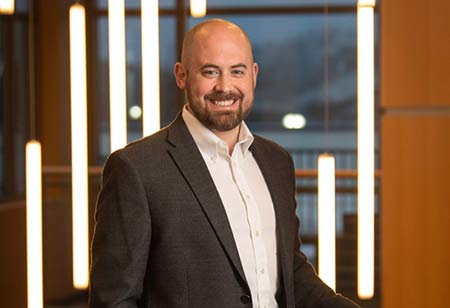
How Early VDC Involvement Reduces Risk and Rework on Complex Projects
Nicholas DiRenzo, Virtual Design & Construction Director, Meyer Najem

Coaching, Not Blaming: Building a Stronger Construction Safety Culture
Jesse Garcia, Safety Manager, E-Z Bel Construction, LLC

Building by the Model: Turning BIM into the Backbone of Field Execution
Adam Abernathy, BIM/VDC Manager, Jesse Stutts Inc

Strategic Leadership in Virtual Design and Construction
Jeremy Register, Director of Virtual Design and Construction, Metcon, Inc


 Copyright © 2026 All Rights Reserved | by:
 Construction Tech Review
| Subscribe | About us | Sitemap| Editorial Policy| Feedback PolicyTop
