THANK YOU FOR SUBSCRIBING


× 
Construction Tech Review Weekly Brief
Be first to read the latest tech news, Industry Leader's Insights, and CIO interviews of medium and large enterprises exclusively from Construction Tech Review





The Value of an Integrated Technology Ecosystem
Vincent Poon, Regional Principal, Design - Digital Integration, Unispace
 Vincent Poon, Regional Principal, Design - Digital Integration, Unispace
Imagine, instead of looking at flat renderings and floor plans, experiencing your future workspace in 3D at the touch of a button; virtually walking through the space and visually understanding and controlling the project’s budget and timeline as the design progresses. Thanks to the rapid pace of technology, computing power, and the consolidated, integrated nature of the design/build model, that concept is now reality.
By combining 3D reality capturing with real-time virtual reality (VR) visualization, and overlaying them on planning and delivery platforms used across the lifetime of a project, we can now create a seamless technology ecosystem that meaning fully brings all project stakeholders together.
This combination allows clients to see spaces via immersive VR, make key decisions on the spot, see updates as they happen, and maximize time and cost efficiency. For a recent financial-tech services workplace renovation in Boston, the design team and I talked through each aspect of the design with the client in a 3D virtual environment.
If firms keep client goals at the forefront, it’s clear that the best route forward is to embrace new ways of working and new, holistic technology solutions, to create more value
When design decisions were made, for example, glass vs. drywall, changes were implemented to the design model rapidly. Updates to the model then updated all associated schedules in real time, giving complete transparency on cost and construction timeline impacts. Feedback noted that this visual decision-making process was extremely helpful, particularly for time-poor leadership.
For project staff, the process provides teams with highly accurate data much earlier than previously possible. For example, at the very beginning of a new technology industry workplace project in New York, we performed a detailed 3D scan of the existing space. These scans are highly accurate, and in this case, provided millimeter accuracies to detect a slight change in floor elevation. This allowed us to design and resolve discrepancies from the beginning, avoiding potential change orders and RFIs later. Thanks to this process, the team and client can also avoid making multiple trips to the site since they can easily refer to the scan to verify existing conditions and take additional measurements.
As a project progresses, so does the ecosystem. The original scan is added to BIM tools such as Revit, overlaying an additional layer of detail and accurate spatial data from the 3D scan.
As the design of the space progresses and new mechanical, electrical and plumbing systems are brought in, they are all accounted for in a more accurate way. We share this model with the other firms working on the project so everyone uses the same platform and all the information is saved in the same place. For a professional services firm relocation in Connecticut, this process allowed us to design and build their space in a significantly shorter period than traditionally possible. We created schedules and drawings directly from the client-approved model in the design phase, and as a result construction personnel started working on the space sooner, saving weeks in the schedule. 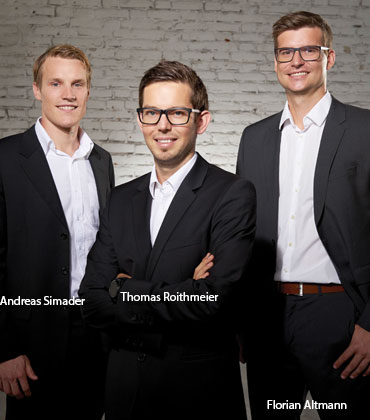
INSITE IT: Digital Construction Technology Providers
Thomas Roithmeier, Co-Founder & CEO, Andreas Simader, CTO & Co-Founder, Florian Altmann, Co-Founder 
Topcon Positioning Systems: At the Intersection of Field and Office
David Ahl, Director, Software Product Management
The industry is at an important juncture where many of the traditional ways of working can be made more efficient by incorporating new technologies into existing processes and by embracing new methodologies that join teams and services together. If firms keep client goals at the forefront, it’s clear that the best route forward is to embrace new ways of working and new, holistic technology solutions, to create more value, satisfaction, and transparency for all.
See Also: Zoominfo | CIO Review
See Also: Media Partner| CIO Review
See Also: Muck Rack | CIOReview

Read Also

Leading with Safety at Scale: A Practical Approach to Risk Management in Construction
Donovan Seeber, CHST, Corporate Safety Manager, Griffith Company

Engineering Roadway Design with Accountability and Vision
Maria Luchey, Project Manager, Roadway Design, Keck & Wood

How Early VDC Involvement Reduces Risk and Rework on Complex Projects
Nicholas DiRenzo, Virtual Design & Construction Director, Meyer Najem

Coaching, Not Blaming: Building a Stronger Construction Safety Culture
Jesse Garcia, Safety Manager, E-Z Bel Construction, LLC

Building by the Model: Turning BIM into the Backbone of Field Execution
Adam Abernathy, BIM/VDC Manager, Jesse Stutts Inc

Strategic Leadership in Virtual Design and Construction
Jeremy Register, Director of Virtual Design and Construction, Metcon, Inc


 Copyright © 2026 All Rights Reserved | by:
 Construction Tech Review
| Subscribe | About us | Sitemap| Editorial Policy| Feedback PolicyTop
