
THANK YOU FOR SUBSCRIBING
× 
Construction Tech Review Weekly Brief
Be first to read the latest tech news, Industry Leader's Insights, and CIO interviews of medium and large enterprises exclusively from Construction Tech Review

Exyte
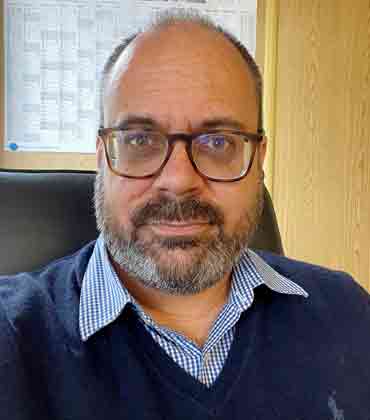
By Manuel Magg, Project Director
Agile Delivery of Semiconductor Facilities
By Manuel Magg
Driven by the global COVID-19 pandemic, the global chip industry is currently undergoing a phase in which demand far exceeds supply. For the coming years, market indicators predict a continued high demand, which global production capacities will be unable to satisfy. At the same time, capital projects in the semiconductor industry are continuously increasing not only in size and cost, but also in complexity. More and ever larger new semiconductor fabs (manufacturing facilities) are required to serve the growing market. The pressure for increased production capacity will constitute a huge challenge to the construction industry for years to come. It becomes clear that methods traditionally used in the construction industry will not enable the breakthrough productivity shift required to meet the challenges at hand. What is urgently needed is the understanding of the waste and losses produced during such complex, dynamic construction projects and of the immense improvement potentials often left unexploited.
For chip manufacturers, time to market is crucial. Research and development on a new manufacturing generation is often still in progress during the construction of the respective high-volume manufacturing fab. Resulting in continuous changes in basic project requirements while a fab is already under design and even construction. These dynamic conditions, together with the high technical complexity, large project size as well as schedule pressure, are what can generate huge amounts of waste, delays, and reworks, which often cause significant cost and schedule overruns.
Large capital projects always require early scope development, strategic pre-planning, and adequate resources in order to be delivered successfully. Digitized processes and a full shift towards virtual design and construction will advance future project performances additionally.
However, with multiple dynamically interconnected systems, semiconductor construction projects will still rely to a high degree on human intelligence. Leadership, motivation, mind setting, coaching, networking, decision-making, continuous learning or risk evaluation are such crucial human interactions. The best way to optimize these human interactions and to achieve a state of high performance is by establishing a team with an agile mindset and team culture as well as an agile project execution model.
"We need to strive for a team culture, where servant leadership provides and maintains an overarching vision to the whole project team, where all team members feel empowered and secure"
Traditionally, construction management of large projects has always strongly relied on hierarchical power, command chains, and on siloed organizations. Instead, we need to strive for a team culture, where servant leadership provides and maintains an overarching vision to the whole project team, where all team members feel empowered and secure to raise concerns, regardless of their position in the organization chart, and where human interaction help create advanced alignment. Where every project team member commits to timely decision-making, rapid delivery and review cycles, frequent customer engagement and feedback, as well as continuous improvement. Project leadership has to initiate, charter, foster, and role model this kind of project team culture.
One of the key features of such an agile construction project organization is the self-organized work-group team. These teams will be accountable for the delivery of a certain scope component (e.g. the Ultra-Pure-Water System, the Cleanroom) from basis of design throughout the project life cycle until hand-over to the owner. These work-group teams consist of a Team Lead, or Product Owner in scrum terms, who defines and manages the requirements and the scope of work; a design lead engineer; a construction manager; one or several trade representatives and an owner’s representative. Ideally, a Scrum Master guides the team towards efficient sprint execution and delivery. Each work-group team consists of members, who collectively possess all skills required to deliver their scope of work, and who are fully empowered to make decisions.
The articles from these contributors are based on their personal expertise and viewpoints, and do not necessarily reflect the opinions of their employers or affiliated organizations.
Top
