THANK YOU FOR SUBSCRIBING


× 
Construction Tech Review Weekly Brief
Be first to read the latest tech news, Industry Leader's Insights, and CIO interviews of medium and large enterprises exclusively from Construction Tech Review




Blueprints in the Storm: Structuring Housing Projects amid Uncertainty
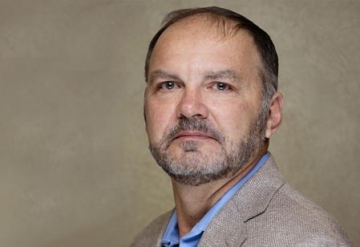
Camila Castano Lozano, Head of Real Estate Project Development, Constructora Bolívar S.A.
 Camila Castano Lozano, Head of Real Estate Project Development, Constructora Bolivar S.A.
Camila Castaño Lozano is a Civil Engineer and MBA graduate from Universidad de Los Andes, with expertise in housing Project structuring, sustainable practices and financial modeling for real estate project development. She leads cross-functional teams in delivering quality and sustainable projects that respond to people’s needs and aspirations.
The construction industry, in its natural state, has always faced numerous variables that can affect profitability, many of which come with a certain level of uncertainty over time. However, since 2020, the industry has been navigating unprecedented challenges that have created an even more uncertain reality.
The COVID-19 pandemic was followed by significant increases in construction material costs—a trend that continued until 2022 and was exacerbated by the war between Russia and Ukraine. Since 2023, however, there has been a significant slowdown in the intention to purchase homes due to economic and social factors.
These include historic increases in interest rates, high inflation affecting purchasing power, rising costs that have translated into higher housing prices, and ongoing economic and political uncertainty. In Latin America, all of these factors have an even greater impact.
Here are a few suggestions for navigating this challenging environment and structuring housing projects that are not only feasible but can meet people’s expectations:
1. Market Research/Analysis and Client Knowledge: Market research for housing projects often focuses on understanding competitors, their offerings, high-performing segments, and demographic data. While it is essential to know which projects are successful and how sales are performing, we often overlook the most crucial aspect: what clients want.
The pandemic has significantly changed home dynamics, family compositions, and even how we experience work. It is a mistake for housing developers to continue designing based on outdated parameters and needs. With higher costs, it is essential to allocate resources where they truly create value for people. Therefore, investing in market research and client knowledge is more important than ever.
2. Risk Management: With so many existing and new variables affecting projects, it is essential to identify and manage risk—including probability and impact—in an organized way that reflects the project’s potential threats. This allows for continuous monitoring of risks and an understanding of how they evolve.
In a constantly changing environment, identifying and monitoring each risk is the key. Depending on their probability, some risks are significant enough to be incorporated into the project’s feasibility analysis.
3. Sensitivity Analysis: Once the risk variables are identified, conducting a sensitivity analysis helps determine how much risk stakeholders are willing to take, analyze various conditions, and create a shared strategy.
4.Innovation: Last but not least, this is a time for innovation. A good understanding of clients should spark creativity. Encourage teams to use tools like AI, new construction materials and processes, and innovative housing models and business approaches. Using innovation to create projects based on how they are lived and experienced makes projects not just good, but great—and the market has responded positively to this.
Finally, uncertainty shouldn’t make us stand still. In fact, an uncertain and changing environment presents an opportunity to become better, more adaptable, and more aligned with future needs.

Read Also

The Human Side of Construction Safety Leadership
Brett Smith, Global Safety Director, Gardner Builders
Leading with Safety at Scale: A Practical Approach to Risk Management in Construction
Donovan Seeber, CHST, Corporate Safety Manager, Griffith Company

Engineering Roadway Design with Accountability and Vision
Maria Luchey, Project Manager, Roadway Design, Keck & Wood

How Early VDC Involvement Reduces Risk and Rework on Complex Projects
Nicholas DiRenzo, Virtual Design & Construction Director, Meyer Najem

Coaching, Not Blaming: Building a Stronger Construction Safety Culture
Jesse Garcia, Safety Manager, E-Z Bel Construction, LLC

Building by the Model: Turning BIM into the Backbone of Field Execution
Adam Abernathy, BIM/VDC Manager, Jesse Stutts Inc


 Copyright © 2026 All Rights Reserved | by:
 Construction Tech Review
| Subscribe | About us | Sitemap| Editorial Policy| Feedback PolicyTop
