THANK YOU FOR SUBSCRIBING


× 
Construction Tech Review Weekly Brief
Be first to read the latest tech news, Industry Leader's Insights, and CIO interviews of medium and large enterprises exclusively from Construction Tech Review


Where Safety Really Lives: Between the Plan and the Jobsite
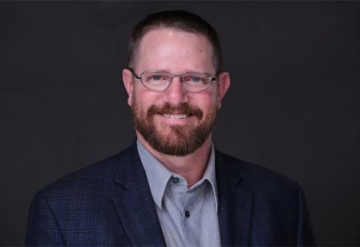
Clint Lee, Safety Director, Great Basin Industrial
 Clint Lee, Safety Director, Great Basin Industrial
Most people think industrial construction safety is about hard hats, handrails, and a binder full of procedures. Those things matter, but after enough years in this industry and enough early morning drives to sites that don’t show up on any map, you learn the truth: safety and compliance live in the space between the plan and reality.
I still remember one project where the schedule was written in ink and the weather was written in spite. We were setting structural steel while the wind clawed at the lifts and pushed snow across the laydown yard like fog. The superintendent had that look I’ve seen a hundred times, eyes on the horizon, jaw set, mentally calculating how many days we were behind and how many promises had already been made to the client. I walked up with my clipboard, but I wasn’t there to “catch” anyone. I was there because I could feel the site tightening, like a rope pulled too hard. That’s usually when mistakes happen, not because people don’t care, but because pressure changes what “normal” feels like.
Compliance is supposed to be the stable part. Codes, regulations, permits, training requirements, those are the lines on the road. But on an industrial site, the road is under construction while you’re driving on it. You have multiple contractors with different cultures and risk tolerance. You have a workforce rotating in and out, some seasoned, some brand new, all trying to prove themselves. You have equipment arriving late, materials substituted, engineering revisions pushed out at 4:58 p.m. on a Friday. The work changes faster than the paperwork can keep up and the gap between “what the plan says” and “what the job is doing” can open wide enough to swallow someone.
Early in my career, I thought my job was to perfect systems: write the procedure, deliver the training, audit the field, close the corrective actions. I’m not saying those things don’t work, they do. But they only work when they’re anchored to the realities of production. The mistake I see young safety professionals make is treating compliance like a shield you can hold up at the gate. In practice, compliance is more like scaffolding: if it’s not built to the shape of the job, people will climb around it.
The hardest conversations I’ve had weren’t with workers, they were with leaders. Not because leaders are bad people, but because they’re carrying competing truths. “We need to hit the milestone.” “We can’t afford an incident.” Both are true. And when those truths collide, you learn whether safety is a priority or a value. Priorities change with the week. Values don’t, at least they shouldn’t. I’ve sat in meetings where a near miss was discussed like an inconvenience: “How fast can we get back to work?” And I’ve sat in meetings where the room went quiet because everyone understood what almost happened. The difference wasn’t the incident itself. The difference was the culture we’d built long before it. Culture is what people do when no one is watching and on a construction site, no one is watching most of the time.
"Safety and compliance live in the space between the plan and reality."
One of the most complicated challenges in industrial construction is the myth of the “bad worker.” I’ve investigated enough incidents to know that the last person who touched the task is rarely the root cause. The real causes are usually upstream: rushed planning, incomplete hazard analysis, unclear roles, missing equipment, poor communication between trades or a work environment that quietly rewards shortcuts. If the system sets people up to choose between doing it right and getting it done, you’re not managing safety, you’re gambling.
That’s why, as a senior safety executive, I spend as much time on the front end as I do in the field. Pre-task planning isn’t paperwork, it’s a strategy. A job hazard analysis isn’t a form, it’s a conversation. Stop work authority isn’t a poster it’s a permission, backed by leadership, with zero retaliation and real follow-through. And audits aren’t about citations, they’re about truth. If you can’t hear bad news on Monday, you’ll meet it on Thursday.
There’s also the human side that rarely makes it into the metrics. The worker who’s on his third straight twelve-hour day and trying to keep his marriage together. The foreman who knows his crew is capable but doesn’t want to look weak by asking for more time. The new hire who nods through orientation but is terrified of being the one who slows the job down. Safety isn’t just technical; it’s emotional. People take risks when they’re tired, stressed, distracted or trying to belong.
I’ve learned to look for signals: the pace quickening, the shortcuts becoming jokes, the silence in the morning huddle, the “we’ve always done it this way” shrug. Those are early warnings. When I see them, I don’t lead with rules. I lead with questions: What changed? What’s different today? What are we pretending isn’t a problem? What do you need to do this safely?
The best safety wins I’ve seen didn’t come from a policy rollout. They came from alignment, when the project leadership team decided, together, that the job would be done safely and built the plan accordingly: realistic schedules, proper staffing, competent supervision, disciplined change management and the humility to pause when conditions shift. When that happens, compliance stops being a burden and becomes a byproduct of good operations.
If I could put one message on every job trailer wall, it would be this: safety and compliance aren’t obstacles to production they’re the foundation of production that lasts. You can’t manage your way out of risk at the last minute. You build your way out of it every day, one decision at a time, long before anyone gets hurt.

Read Also

The Human Side of Construction Safety Leadership
Brett Smith, Global Safety Director, Gardner Builders
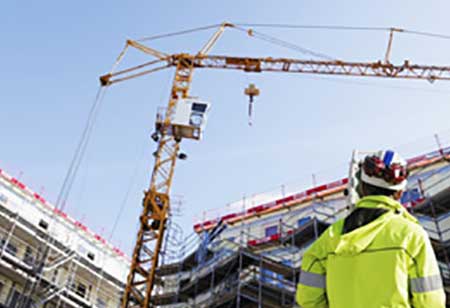
Leading with Safety at Scale: A Practical Approach to Risk Management in Construction
Donovan Seeber, CHST, Corporate Safety Manager, Griffith Company

Engineering Roadway Design with Accountability and Vision
Maria Luchey, Project Manager, Roadway Design, Keck & Wood
How Early VDC Involvement Reduces Risk and Rework on Complex Projects
Nicholas DiRenzo, Virtual Design & Construction Director, Meyer Najem
Coaching, Not Blaming: Building a Stronger Construction Safety Culture
Jesse Garcia, Safety Manager, E-Z Bel Construction, LLC
Building by the Model: Turning BIM into the Backbone of Field Execution
Adam Abernathy, BIM/VDC Manager, Jesse Stutts Inc


 Copyright © 2026 All Rights Reserved | by:
 Construction Tech Review
| Subscribe | About us | Sitemap| Editorial Policy| Feedback PolicyTop
