THANK YOU FOR SUBSCRIBING


× 
Construction Tech Review Weekly Brief
Be first to read the latest tech news, Industry Leader's Insights, and CIO interviews of medium and large enterprises exclusively from Construction Tech Review





Reframing Application Engineering for the Digital Age
Mark H. Wayne, PhD, PE, F. ASCE, Director of Application Technology & Engineering, Tensar, a division of CMC
 Mark H. Wayne, PhD, PE, F. ASCE, Director of Application Technology & Engineering, Tensar, a division of CMC
Maria Luchey is a Project Manager at Keck & Wood, leading public-sector roadway design projects. With experience across state DOTs and the USDOT, she combines technical expertise, regulatory knowledge and systems-oriented leadership to deliver accountable, sustainable infrastructure solutions.
I translate complexity by treating every technical problem as a decision problem. The first step is clarifying what decision the customer actually needs to make, choice of concept, risk acceptance, constructability path, schedule constraint or cost boundary. Once the decision is clear, I structure the engineering around three elements: assumptions, options and consequences.
From there, I focus on simplification without dilution. Which means converting a dense technical narrative into a small number of if/then choices: If the site constraints are X, then solution A is most robust; if Y is dominant, then solution B is more economical but needs additional verification. I have found customers do not need every derivation, they need what drives the outcome, what is uncertain and what can be done to reduce uncertainty.
Finally, I aim to make the solution reviewable. That means leaving a clean trail: what inputs were used, which standards or design checks governed the approach, what sensitivity checks were run and what field verification is recommended. When the reasoning is traceable, customers and stakeholders can move faster, because they trust the work.
Digital Engineering Systems
Digital technology has shifted application engineering from producing a calculation to managing a decision system. Modern tools help us move faster in three ways: modeling, collaboration and repeatability.
On the modeling side, digital workflows allow us to test scenarios quickly, compare alternatives and stress-test assumptions. That accelerates iteration and improves decision quality, especially when uncertainty is high.
On the collaboration side, distributed teams now rely on shared digital artifacts—structured notes, living documents and versioned decision logs—to keep alignment as projects evolve. The benefit is not just speed; its continuity. When a project changes hands or crosses functions, the reasoning stays intact.
“I translate complexity by treating every technical problem as a decision problem.”
On repeatability, digital systems help capture how we solved this last time into templates, checklists and reusable workflows. That reduces rework and improves consistency, particularly in high-volume application engineering where the goal is not novelty every time, but dependable execution at scale.
Innovation With Reliability
I view innovation and reliability as complementary, not competing, if you manage risk deliberately. Reliability comes from disciplined fundamentals: clear assumptions, conservative failure-mode thinking, and verification plans. Innovation comes from expanding the option set and improving how we evaluate tradeoffs.
The balance is achieved through staged adoption. I am comfortable using new methods when they are bounded: pilot them on lower-risk applications, benchmark them against known outcomes, and define where they are appropriate versus where they are not. I also separate innovation in method from innovation in decision. You can use advanced tools to explore alternatives while still anchoring the final recommendation in proven checks and transparent logic.
Most importantly, reliability requires humility: acknowledging uncertainty and designing verification into the plan. When innovation includes a clear validation pathway, it becomes a reliability enhancer rather than a reliability threat.
Cross-Functional Speed
Cross-functional teams improve speed and quality when they reduce translation loss. In many projects, delays and defects do not come from math errors, they come from misaligned assumptions between engineering, sales, product, construction and external stakeholders.
The fastest teams establish a shared definition of success early: what good looks like, which constraints are fixed, what evidence will be considered sufficient and who owns each decision boundary. They also rely on shared artifacts—a single set of assumptions, a clear decision log, and a short list of open risks—so the team can move in parallel rather than waiting for sequential handoffs.
When cross-functional work is done well, it creates two advantages: engineering spends less time reworking outputs for shifting expectations, and downstream teams spend less time interpreting what engineering meant. That is where speed and quality compound.
Skills For Modern Application Engineers
The strongest application engineers I have worked with combine three skill sets: technical fundamentals, digital fluency and communication that builds trust.
Technical depth still matters, but modern projects demand engineers who can simplify complexity without losing rigor, translating analysis into choices that non-specialists can act on.
Digital fluency is increasingly foundational, not optional. In my expanded role as an internal AI educator, I have come to view it as a professional practice, not a software skill. I encourage engineers to use AI-assisted tools as disciplined thinking and drafting partners to reduce time spent on repetitive work—summaries, first drafts, organizing notes—so they can invest more effort in judgment-heavy tasks like defining assumptions, selecting verification methods, and managing risk.
The goal isnt for everyone to become an AI specialist. Its to build comfort with clear prompting frameworks, strong data hygiene, and collaborative workflows that keep decisions traceable and reviewable—capturing outputs into reusable documentation rather than leaving them trapped in one-off conversations.
Just as importantly, I emphasize responsible AI adoption: governance, human oversight and ethical use before delegating higher-risk work to tools or agents. When teams apply that discipline, digital methods become a force multiplier that strengthens engineering quality and consistency.
Finally, communication and collaboration remain critical. Many application engineering outcomes depend on cross-functional coordination, aligning expectations, narrowing uncertainty, and ensuring the solution is constructable and verifiable. Engineers who can lead those conversations, while staying grounded in evidence, will be the most effective.

Read Also

The Human Side of Construction Safety Leadership
Brett Smith, Global Safety Director, Gardner Builders

Leading with Safety at Scale: A Practical Approach to Risk Management in Construction
Donovan Seeber, CHST, Corporate Safety Manager, Griffith Company

Engineering Roadway Design with Accountability and Vision
Maria Luchey, Project Manager, Roadway Design, Keck & Wood
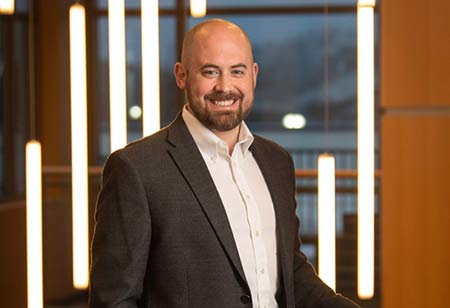
How Early VDC Involvement Reduces Risk and Rework on Complex Projects
Nicholas DiRenzo, Virtual Design & Construction Director, Meyer Najem

Coaching, Not Blaming: Building a Stronger Construction Safety Culture
Jesse Garcia, Safety Manager, E-Z Bel Construction, LLC

Building by the Model: Turning BIM into the Backbone of Field Execution
Adam Abernathy, BIM/VDC Manager, Jesse Stutts Inc


 Copyright © 2026 All Rights Reserved | by:
 Construction Tech Review
| Subscribe | About us | Sitemap| Editorial Policy| Feedback PolicyTop
