THANK YOU FOR SUBSCRIBING


× 
Construction Tech Review Weekly Brief
Be first to read the latest tech news, Industry Leader's Insights, and CIO interviews of medium and large enterprises exclusively from Construction Tech Review



What Contributes To A Mega Projects Success Within An Asset Management Framework?
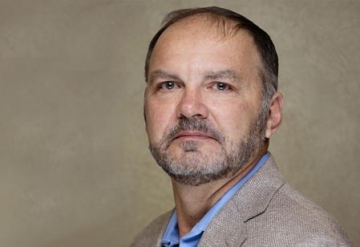
Andrew Wheatley, Project Director And Procurement Leader For Defence, Service Stream, Service Stream
 Andrew Wheatley, Project Director And Procurement Leader For Defence, Service Stream, Service Stream
Andrew Wheatley (FIEAUST, CPEng, NER, CFAM, GACID) is employed by Service Stream as a director of operations and maintenance. He is an electrical engineer with postgraduate qualifications and experience in systems engineering, operations and asset management within the transport infrastructure & defense sectors. Andrew also has extensive experience in maintenance engineering within the Australian Defence Force. Andrew is a part-time PhD student in the School of Mechanical and Mining Engineering at the University of Queensland in Australia, studying the transition and commissioning of a mega project from Design and construction to Operations throughout the asset management lifecycle.
With decades of experience in different technical and engineering industry sectors, Andrew Wheatley is currently bringing all these experiences together by researching an area as mega (major) projects transition from the procurement phase to the operational phase and the impact of success or failure of projects throughout its asset management (AM) lifecycle. The challenges of managing an asset over its lifecycle become more critical in a multi-asset system (systems of systems) with multi-interests, multi-stakeholders and investors. The modern technical interface and issues of complex software, physical assets and stakeholders can add considerable cost due to the requirements of modern infrastructure and major projects.
Different stakeholders will have different views with regard to project success. Much of the success of AM principles, especially in the private sector, can be attributed to the learnings of significant disasters or events of asset failure in terms of loss of life, lost revenues and/or organizational profits. In the public sector, a ‘perfect storm’ is taking place as the combination of aging large-scale infrastructure, reduced budgets, declining population, low affordability, and the accelerating transition to renewable energy create significant issues for infrastructure owners and managers.
Asset management has emerged as a recent engineering approach in the public infrastructure sector, which promises to achieve more value with effective and efficient management of resources. AM is founded on a set of fundamentals of value, alignment, leadership and assurance, which are detailed in the series of International Asset Management Standards ISO5500x. The goals of AM suggest that appropriate asset considerations, justifications and risk management assumptions in the procurement phase of an asset should be managed over the asset’s complete lifecycle, thus ensuring the best cost-benefit solution for the owner who financiers, builds and operates the asset. So why aren’t these fundamental concepts supporting the success of the delivery of a project? Where are the linkages to the operational outcomes of a mega-project? Project risks are often transferred during the commissioning and handover from design and construction (D&C) to the operations and maintenance (O&M) phase without the owners (or operators) of the asset being fully aware of the risk transfer or the associated cost implications. Commissioning schedules are being compressed or reduced due to project schedule pressures. These often unknown risks will increase the cost of managing and operating the asset due to what appeared to be (at the time) cost benefits and savings in the D&C phase of the asset procurement.
These poor asset lifecycle decisions also delay any recovery of asset costs (from any business case) or, worse still, do not fully use the asset for what it was intended, therefore reducing the operational effectiveness or service life.
"Asset management has emerged as a recent engineering approach in the public infrastructure sector which promises to achieve more value with effective and efficient management of resources"
For some time, industries have been grappling with the realization that most of an asset’s whole lifecycle (WoL) costs are in the operations phase, with figures of up to 75 percent of the WoL. (WoL includes all costs from birth to disposal of an asset). This brings to light that designers within the D&C phase with different motivations need to understand the importance of addressing the long-term lifecycle implications prior to locking down the design, which has implications for the life of the asset. These short-term considerations present unknown risks that are not considered in the asset conception or procurement phase, which could have been eliminated or reduced in the design phase if appropriately considered. Considerations such as access for maintenance and future asset upgrades and use of materials that require reduced or no maintenance are some examples of what I have seen would have reduced the WoL costs for the owner of long-term assets if considered appropriately during the design phase. There are still what appear to be unnecessary project failures that result from poor management in the areas of risk and stakeholder management. Projects should be managed with a focus on the realization of their strategic and long-term goals to realize their expected benefits and operational performance.

Read Also

The Human Side of Construction Safety Leadership
Brett Smith, Global Safety Director, Gardner Builders

Leading with Safety at Scale: A Practical Approach to Risk Management in Construction
Donovan Seeber, CHST, Corporate Safety Manager, Griffith Company

Engineering Roadway Design with Accountability and Vision
Maria Luchey, Project Manager, Roadway Design, Keck & Wood
How Early VDC Involvement Reduces Risk and Rework on Complex Projects
Nicholas DiRenzo, Virtual Design & Construction Director, Meyer Najem

Coaching, Not Blaming: Building a Stronger Construction Safety Culture
Jesse Garcia, Safety Manager, E-Z Bel Construction, LLC

Building by the Model: Turning BIM into the Backbone of Field Execution
Adam Abernathy, BIM/VDC Manager, Jesse Stutts Inc


 Copyright © 2026 All Rights Reserved | by:
 Construction Tech Review
| Subscribe | About us | Sitemap| Editorial Policy| Feedback PolicyTop
