
THANK YOU FOR SUBSCRIBING
× 
Construction Tech Review Weekly Brief
Be first to read the latest tech news, Industry Leader's Insights, and CIO interviews of medium and large enterprises exclusively from Construction Tech Review
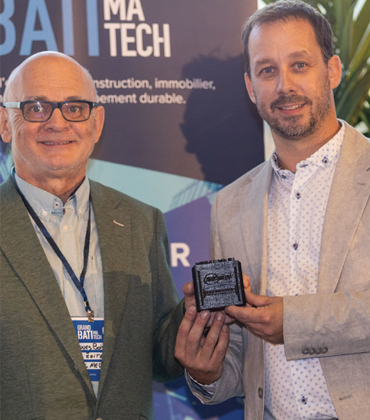
Joel Victoria is a Senior Construction Manager at Colliers, known for turning project challenges into opportunities. With a sharp eye for detail and a heart for mentoring, he leads teams through cost overruns, scheduling delays, and design changes—always finding a better way forward. Victoria embraces tech like AI and drones for efficiency, but still champions face-to-face collaboration where it counts. A natural leader and problem-solver, he blends professionalism with a people-first approach, fostering teamwork, tenant engagement, and a fun, respectful work environment that delivers WOW-level service. Building Success from the Ground Up This journey has been deeply personal and, at times, very challenging. To give you a clear overview, I started from the ground up. My career began as a cleaner—something that might not be reflected on my LinkedIn profile. From there, I moved into building maintenance, which sparked a deeper interest in how buildings are constructed. That operational background led me to roles such as building operator, operations supervisor, and positions on the technical services side. Each role gave me hands-on experience and a deeper understanding of buildings' functions. This foundation gave me a distinct advantage as I transitioned into construction project management. Knowing how to maintain a building provided me with practical insight into how one should be built. I’ve used that knowledge to inform my decisions in construction, blending operational and project perspectives. This mix of experience continues to shape my approach to project management today. My Role as a Senior Construction Manager As a Senior Construction Manager, I oversee both project execution and team leadership. I manage a team of five project managers while also handling my projects, which range from 1,000-square-foot tenant buildouts to large-scale initiatives, such as 15,000 square feet of asphalt replacement or the installation of a 20-

Top AI Powered Construction Estimating Software in Canada 2026
The moment an estimator opens a new set of drawings, the pressure begins. Every line, symbol, and quantity must be interpreted correctly, often under tight deadlines and competitive conditions. Accuracy determines whether a bid is won, and profitability depends on getting it right the first time. For estimators and construction companies, this precision-heavy work leaves little margin for error and even less time for judgment. Most of that effort is concentrated in takeoff. Manual counting, symbol recognition, and quantity extraction dominate the estimating workflow, requiring sustained focus across long sessions. The work is repetitive and time-consuming, and fatigue-driven mistakes are a constant risk. Too high, and the bid is lost. Too low, and the job is won at a cost. Created in close collaboration with trade professionals, Estim.ai addresses a specific and persistent challenge in estimating. It is an AI-powered construction and manufacturing estimating software designed to automate the most tedious and time-consuming parts of the process. Developed by Explor.ai, a Quebec-based AI firm, in partnership with field estimators, the platform focuses on automating the most labor-intensive aspects of takeoff. At the same time, it keeps professionals firmly in control of key decisions. Rather than replacing expertise, Estim.ai is built to support it. By removing manual burden, it allows estimators to focus on validation, accuracy, and judgment..
3-D Print Tech

The search for a better way to build homes became personal for Lance Thrailkill after he lost a house to mold. Frustrated by traditional homes and their construction limitations exposed during the housing crisis, an emerging technology — 3D home printing — caught his eye. Around the same time, real estate veteran Craig Pettit had recognized the potential of 3D home printing and invested in a printer to create rental properties. Their paths crossed, and Thrailkill—owner of All Metals Fabricating and passionate about automation—became captivated by the technology. Seeing a chance to change the industry, they decided to collaborate and pivoted their portfolios to create PRINT3D Technologies. “Combining my manufacturing and automation expertise with Craig’s real-estate market knowledge in this company, we set out to disrupt the 3D home printing industry,” says Thrailkill, CEO and co-founder. The company 3D prints homes and manufactures 3D home printers to enable faster, more efficient and more sustainable construction. It is all set to lead the 3D home construction industry with its patented machine design, engineered to enhance overall system quality. Anticipating the widespread adoption of 3D home printing technology, PRINT3D Technologies strategically positions itself as the go-to provider for innovative building solutions. As cities refine inspection processes and implement green-tagging standards, the company stands ready to scale its impact, ensuring the industry keeps pace with growing demand. Unlike many peers who buy their machines from exclusive sellers, PRINT3D Technologies offers 3D home printing and sells house printing machines—a unique combination in the industry. It also employs an in-house feedback loop, which further refines the offering. The company’s partnership with All Metals Fabricating enables it to respond better to the market with the facility’s multi-million-dollar fabrication infrastructure. The facility’s world-class automation and engineers allow PRINT3D Technologies to operate independently and debt-free.
Road Construction
When it comes to quantitative data, there is no shortage of apps on a jobsite. One logs crew hours, another tracks fuel consumption, and a third flags a late asphalt delivery. Yet none tell you the one thing that matters most: how well the road is actually being built. The moment you ask a site manager about qualitative information, real-time data vanishes, dashboards give way to clipboards, spreadsheets scatter across desks, and you find yourself back on the phone with the lab. DAWAY closes that blind spot in quality control. DAWAY changes that. Built specifically for the quality control side of road construction, DAWAY is a smart, role-based SaaS ecosystem that gives every stakeholder—from field technicians to general managers—real-time visibility into the materials, measurements, and decisions that determine long-term performance. Whether you’re making snap decisions on-site or planning next year’s mix design based on this year’s results, DAWAY turns quality control into a shared, data- driven process that helps teams build better roads—faster and smarter. “We designed DAWAY as an ecosystem where every player— from lab techs to managers—has the tools and data they need to act in real time. It’s about empowering each role with clarity and keeping the whole operation in sync,” says Guylaine Caux, CEO of DAWAY. Field-Driven and Role-Centric System At its core, DAWAY consists of two primary components: field modules and role-based dashboards. The field modules allow everyone—from lab technicians to jobsite supervisors—to input georeferenced data in real time, eliminating the lag and errors of traditional paper workflows. Whether it’s compaction measurements, thermography data, or material test results, everything flows directly from the site into the ecosystem. Meanwhile, dashboards are automatically populated with analyzed data tailored to each user’s function. A lab technician might see detailed mix design feedback, while a technical director can cross-reference lab, production, and jobsite data to catch quality issues before they escalate. A general manager, on the other hand, gets a project-wide overview and can monitor performance, progress, and productivity at a glance. DAWAY brings clarity without complexity, helping the entire operation stay proactive and potentially reduce litigation?

CXO INSIGHTS

Promoting Human Technology
Peter Wheatley, Director of Preconstruction, Metro-Can Construction

BIM 7D Asset Information Modeling: Realizing the Full Potential of VDC
Federico Pensa, Vice President of Technology, Fayolle Canada Inc
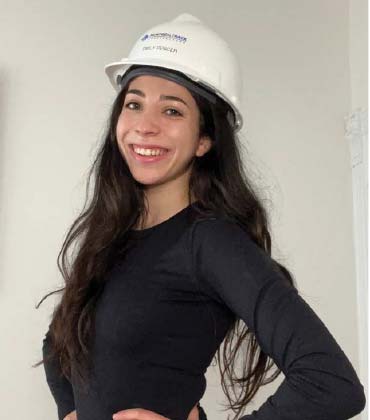
Navigating the Evolving Landscape of Construction Management
Emily Pencer, Project Manager, Roxboro Excavation Inc

The Keys to AI Technology Leapfrogging
Adam Krob, Director of Information Technology, Field Audit and Process Improvement, Boh Bros Construction Co., LLC

How to Leverage Procurement During times of Economic Distress
Felipe Cunha, Director Procurement, QuadReal Property Group


IN FOCUS

Canada's Construction Industry: Harnessing AI for Accurate Cost Estimation and Profitability
AI-driven construction estimating improves risk assessment, cost control, and collaboration, enabling accurate bids, protected margins, and scalable decision-making.
Enhancing Cost Transparency in Canadian Construction: The Benefits of AI Estimating Software
AI construction estimating software enhances productivity, promotes cost transparency, and provides a significant competitive edge in the industry.
EDITORIAL
Intelligence at the Point of Estimation
Project margins are often determined long before ground is broken. In construction, estimation accuracy shapes competitiveness, risk exposure and long-term profitability. As drawings grow more complex and timelines tighten, firms are turning to targeted automation to eliminate repetitive tasks while preserving professional judgment. This edition of Construction Tech Review examines how intelligent tools are reshaping preconstruction workflows.
Recognized as Top AI-Powered Construction Estimating Software In Canada 2026, Estim.ai leads this transformation. Developed by Explor.ai in collaboration with trade professionals, the platform focuses narrowly on automating manual takeoffs. By extracting quantities and counting symbols directly from drawings, Estim.ai automates 80 to 90 percent of repetitive work and reduces takeoff time by 60 to 90 percent. Estimators move from prolonged counting sessions to validation and strategic review, significantly reducing fatigue-driven errors while increasing bid capacity.
Industry perspectives reinforce the importance of disciplined execution. Randy Borron, Managing Director, Data Center Advisory Group at Cushman & Wakefield, highlights how infrastructure risks, power constraints and portfolio imbalances can be reframed as opportunities through strategic planning and site selection. Joel Victoria, Senior Construction Project Manager at Colliers, emphasizes the persistent challenges of cost overruns, labor shortages and communication gaps, while advocating for balanced adoption of AI, drones and in-person collaboration to maintain project control.
Across estimation, infrastructure planning and on-site management, one principle prevails. Technology delivers impact when it strengthens professional judgment rather than replacing it. We invite readers to explore how focused AI and disciplined leadership are redefining certainty in construction performance.

 Copyright © 2026 All Rights Reserved | by:
 Construction Tech Review
| Subscribe | Sitemap| Newsletter| Editorial Policy| Feedback PolicyTop
